Hiring Advice
How to Choose a Moving Company in Minnesota
Minnesota has no shortage of moving companies. Some are excellent. Some are unlicensed. Some will quote you low and inflate the bill at the end. Here's exactly how to tell the difference.
01
Verify Their MN DOT Number
A company moving household goods within Minnesota needs operating authority from the Minnesota Department of Transportation. For a move to another state, they need a USDOT number from the FMCSA. Ask for the number and look it up yourself. If they can't provide one or it comes back invalid — walk away. An unlicensed mover leaves you with almost no recourse if something goes wrong.
CPM: MN DOT #385610 — Verify anytime02
Ask What the Coverage Actually Pays
"Licensed and insured" doesn't tell you what you'd get if something breaks. That's decided by the liability level on your paperwork. Released Value pays just $0.60 per pound, per item — about $30 for a 50 lb TV. Full Value Protection covers repair or replacement. On a Minnesota move, you should only end up at 60 cents if you sign for it. Ask the mover to explain your options before move day. We break it down in what "licensed and insured" actually means.
03
Read Reviews — The Right Way
Star ratings matter, but patterns inside reviews matter more. Look for: punctuality, careful handling, clear communication, no surprise charges. Red flags: damaged items, price changes at delivery, crew that was late or unprepared. Also check how the company responds to negative reviews — a professional company addresses them directly.

Floor runners before anything moves — a small detail that reveals a lot about how a company operates.
04
Get a Written, Itemized Quote
A professional mover tells you exactly how your bill is calculated before the move begins — hourly rate, flat truck fee, mileage, minimums. Vague pricing or nothing in writing is how you end up with surprise charges at delivery. CPM pricing: flat-rate White Glove and Red Glove quotes, or Basic Hourly at $150/hr (2 movers), $225/hr (3), $300/hr (4) + $175 truck fee + $35 materials + $1.29/mile, with a 3-hour minimum. Disclosed before every job. See what a move actually costs.
05
Ask What Equipment They Bring
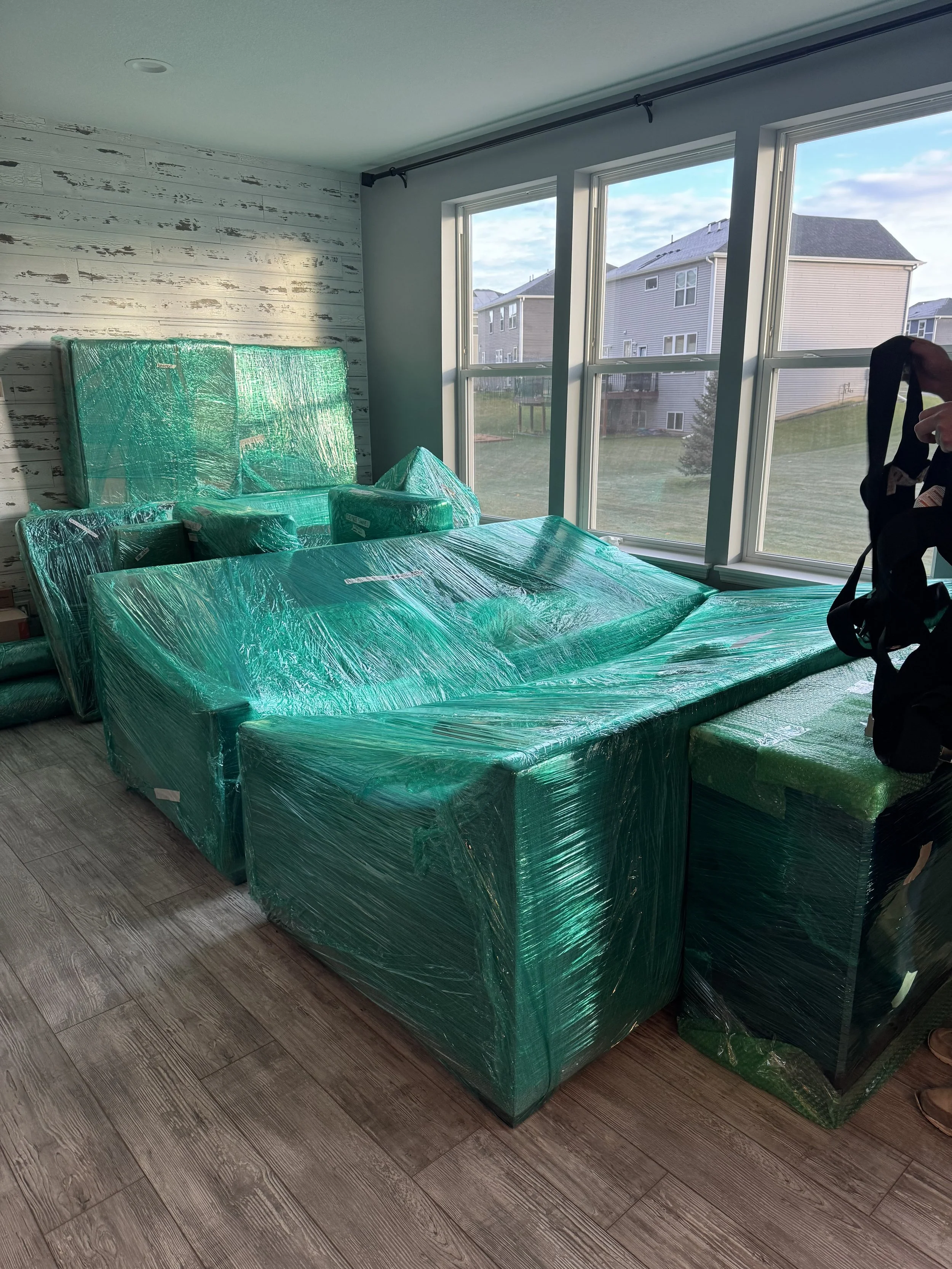
A professional crew arrives with moving blankets, shrink wrap, dollies, floor runners, door frame protection, and tie-down straps. These aren't extras — they're the baseline for any professional operation. If the answer is "just the truck," your furniture is going to have a rough day.
06
Ask Who Actually Does the Move
Some companies act as brokers — they take your booking and hire a subcontracted third party to show up. You get strangers you've never vetted handling your belongings. Ask directly: "Will your own employees do the move?" The answer should be a clear, immediate yes.
07
Choose a Company That Knows Minnesota
Local movers know Minneapolis parking permit rules, HOA move-in hour restrictions in the suburbs, and what a March storm can do to a move that looked fine in the forecast two days before (more on that in our winter moving guide). Local experience isn't a nice-to-have — it directly affects how your move goes.
🚩 Red Flags — Walk Away If You See These
- No MN DOT number, or they won't provide one
- Can't name their insurance carrier or coverage type
- Quote is dramatically lower than every other company
- Refuses to give a written, itemized quote
- Asks for a large cash deposit before the move
- Reviews mention hidden charges or price changes at delivery
- Won't tell you who will actually be doing the move
- No reviews, or all reviews are suspiciously generic
What a Great Moving Company Looks Like
- Provides a written, itemized quote before the move begins
- Confirms DOT number and insurance without hesitation
- Shows up on time with a professional crew and proper equipment
- Lays floor protection and door frame pads as standard — not an upsell
- Places every item where you want it and reassembles furniture
- Doesn't leave until you've done a walkthrough and are satisfied
Quick Answers
How do I know if a moving company is licensed in Minnesota?
Ask for the mover's MN DOT number for a move within Minnesota, or USDOT number for a move to another state, and look it up yourself with MnDOT or the FMCSA. If a company can't give you a number, don't book with them. Collegiate Power Movers operates under MN DOT #385610.
What questions should I ask a moving company before booking?
Ask for their license number, what their coverage pays per pound if something is damaged, how the bill is calculated including every fee and minimum, what equipment the crew brings, and whether their own employees will do the move.
What are the red flags of a bad moving company?
No license number, no written itemized quote, a price far below everyone else, a large cash deposit up front, reviews that mention surprise charges at delivery, and vague answers about who will actually show up.
How far in advance should I book movers in Minnesota?
From May through September, book two to three weeks ahead, especially for the end or start of a month. From October through April, about a week ahead is usually enough.
Book a Crew You Can Trust
MN DOT #385610 · Licensed & Insured · 140+ five-star reviews · Based in Woodbury